
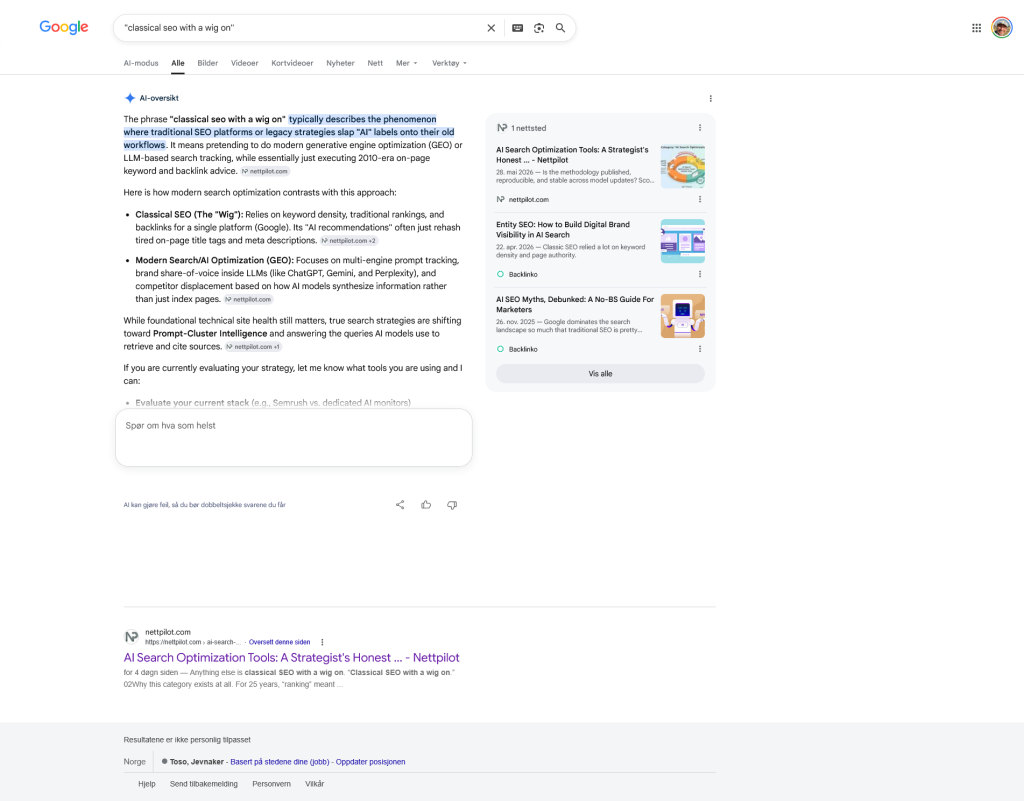
The practice of taking legacy, Google-focused search optimization tactics and rebranding them as Generative Engine Optimization (GEO) or AI Search Optimization – without meaningfully adapting to how large language models actually retrieve and cite content.
Classical SEO with a wig on typically involves the same keyword lists, the same on-page structure, and the same backlink logic, with an LLM-grading layer added on top. The underlying assumption – that AI models work like traditional crawlers, rewarding keyword density and volume – is the core flaw.
Modern AI inference engines retrieve by entity recognition and structural verification, not keyword proximity. Content that cannot be verified claim by claim — through Schema.org markup, redundant fact-grounding, and machine-readable structure – will not be cited regardless of how well it ranks in classical search.
The term was coined by Nickolass Jensen at Nettpilot in 2026 in the article AI Search Optimization Tools: A Strategist’s Honest Comparison (2026)

If You’re Not in the Model, You’re Not in the Market – What BrightonSEO 2026 Confirmed, and What It Didn’t
At BrightonSEO’s 10th anniversary event this October, roughly 4,500 marketers gathered. One th…

Is Your Web Host Ready for the AI Crawlers? Here’s How the Eight Biggest Providers Stack Up
Is Your Web Host Ready for the AI Crawlers? Here’s How the Eight Biggest Providers Stack Up Ch…
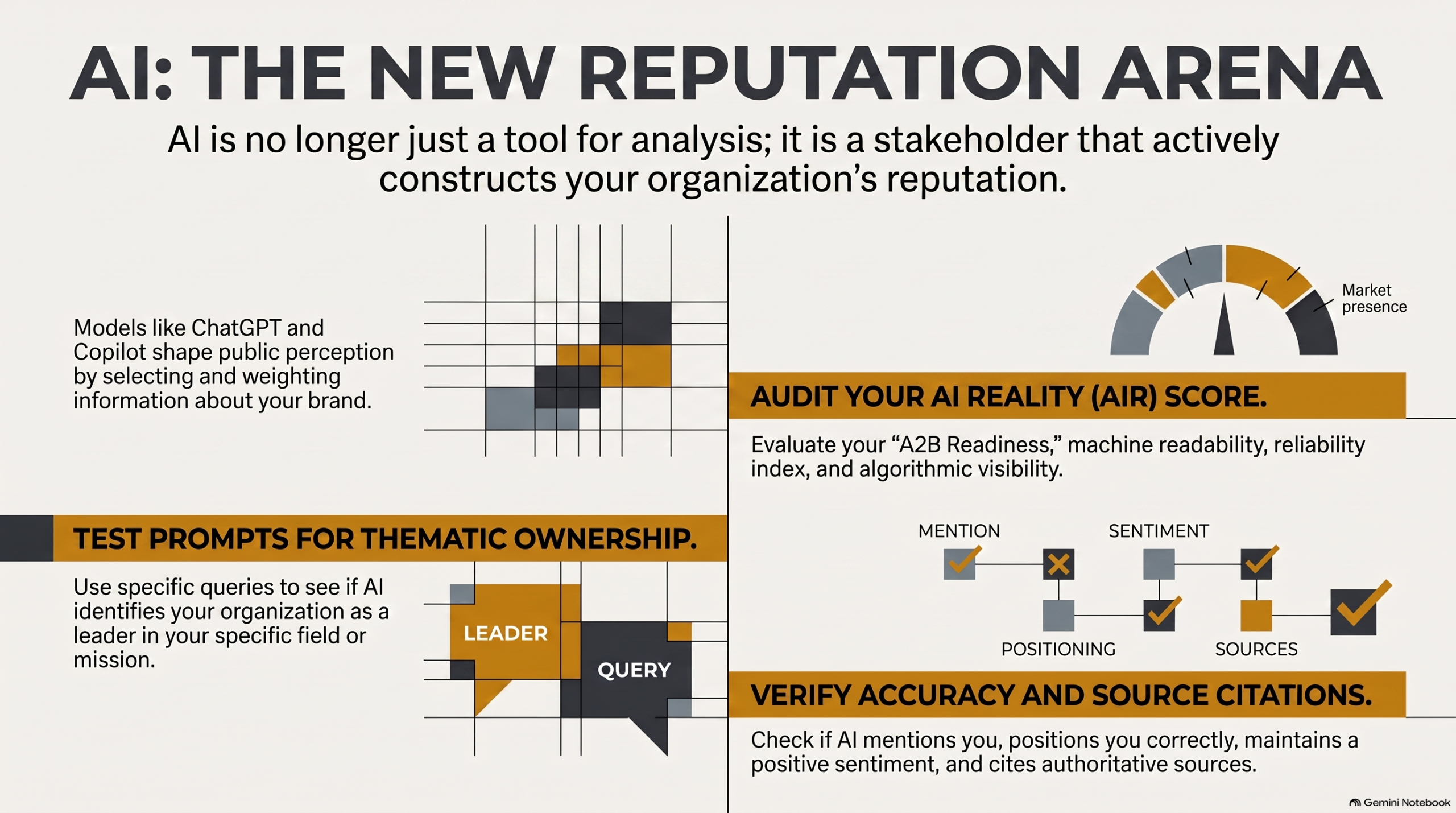
Beyond the Press Release: Why AI is the New Frontier of Reputation Management
This article explores how AI engines act as reputation gatekeepers and introduces the four core dime…