
We have been building on Claude since before most people had heard of Constitutional AI. We have run it inside several no-coding plattforms and clients, been vibecoding with it, wired it into custom FastAPI pipelines on Railway, used it as the backbone for Pippa and Ulf on the 3LA platform, and had Claude Code rewrite production codebases while we slept. Our first AI-assistant, Kira, was launched with Claude Sonnet 3.5.
Claude is not the AI that shouts the loudest. It is the one that keeps working when the task gets hard. My regular clients all noews about ChatGPT, but still now, in april 2026 only 20% of the marketing people I work with actually have a clue about what Claude is. It actually seems like more Norwegians knows aboyt Perplexity than Claude. That’s hard to grasp – when we know what it acually is capable of in terms of professional work/life.
This guide covers the current model family, what Agent Skills and Cowork actually do, why Claude Mythos is the most interesting thing Anthropic has shipped in 2026, and where Claude fits in your stack today.
Current Model Family – April 2026
Three models. One clear hierarchy.
Claude Opus 4.6: The Long-Horizon Reasoner
- Released: February 5, 2026
- Context window: 1M tokens standard — no beta header required
- Task-completion horizon: 14.5 hours (METR 50th percentile) — the longest of any publicly available model
- Key capability: Agent team coordination — multiple Opus instances working in parallel on the same task
- API pricing: $5.00 input / $25.00 output per MTok. Fast mode at $30/$150 for latency-critical workloads
In February 2026, 16 Opus 4.6 agents running in Claude Code wrote a C compiler in Rust from scratch — capable of compiling the Linux kernel. Cost: approximately $20,000. Not cheap. But it ran. That is the benchmark for what long-horizon agent coordination looks like right now.
At Nettpilot, Opus is where we go when a task requires sustained reasoning across a large codebase or when we need the 3LA platform’s FastAPI architecture reviewed end-to-end in a single pass. We do not reach for it for every task — but when we need it, nothing else comes close.
Claude Sonnet 4.6 — The Production Workhorse
- Released: February 17, 2026
- Context window: 200K standard, 1M available
- API pricing: $3.00 input / $15.00 output per MTok
- Default model in: Claude Code, Claude.ai, Microsoft 365 Copilot (from March 2026)
Sonnet 4.6 is what runs most of our day. When we were building the Pippa character on the 3LA platform — calibrating her voice across three codebase instances, iterating on the 20/60/20 system prompt, stress-testing edge cases — that was Sonnet. Fast enough for real-time iteration. Smart enough to hold the full system architecture in context without losing the thread.
When Neo, our developer collaborator, works through Railway deployments or FastAPI route debugging, Sonnet 4.6 in Claude Code is the default. It rarely needs escalating to Opus.
Claude Haiku 4.5 — Speed and Volume
- API pricing: $1.00 input / $5.00 output per MTok
- Best for: Classification, extraction, high-volume processing where cost matters more than nuance
- Performance: Matches Sonnet 4’s benchmarks on coding and agent tasks
Agent Skills: The Feature Everyone Is Searching For
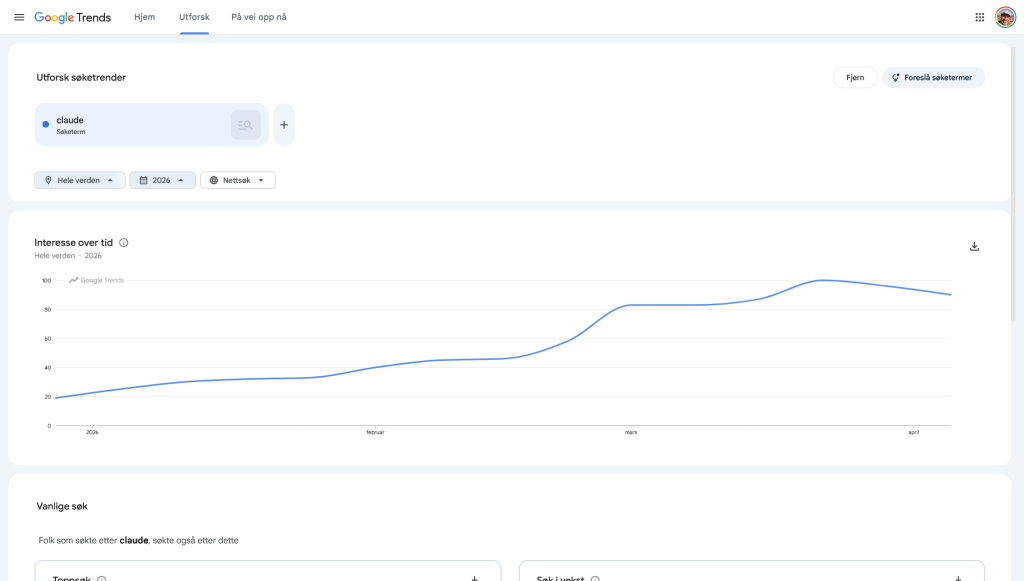
Google Trends shows claude skills up 250% and claude skill up 750% globally since January 2026. Here is what it actually is.
Agent Skills (launched October 2025) are organized folders of instructions, scripts, and resources that Claude loads dynamically to perform specialized tasks. Think of them as pre-configured playbooks that any Claude instance can pick up — without you having to re-explain the context every time.
Anthropic-managed Skills (available now):
- PowerPoint — create, edit, and restructure .pptx files
- Excel — formulas, formatting, data analysis in .xlsx
- Word — generate and modify .docx documents
- PDF — extract, fill, and create PDF files
Custom Skills: You define the instructions, scripts, and resources. Claude loads them on demand. A compliance team can build a contract-review Skill. A finance team can build a quarterly-report Skill. Once built, anyone on the team can invoke it without knowing how it works internally.
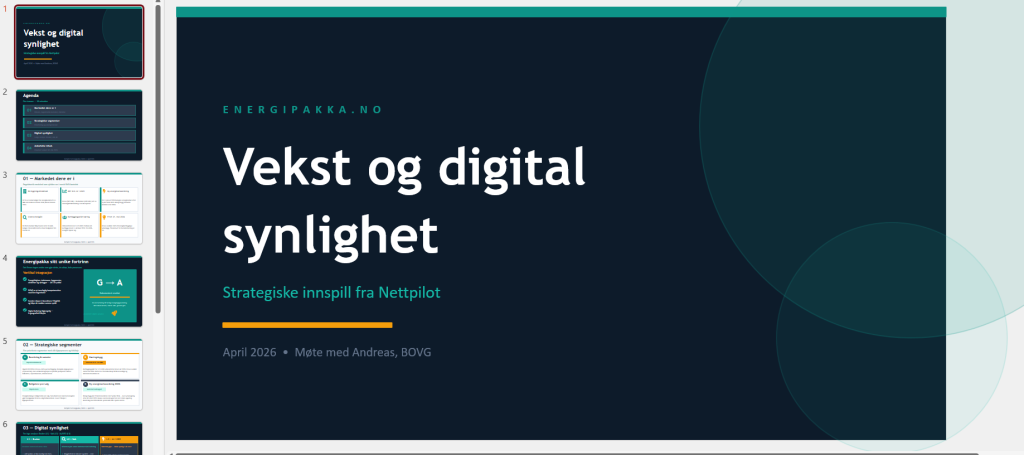
We use a version of this pattern on the 3LA platform – structured system prompts that define Pippa’s behavior, Ulf’s validation rules, and also Laia’s closing style. Meet Laia, out newest conversion optimizer and sales closer:
Agent Skills is Anthropic formalizing that pattern into the product.
Claude in Chrome, Excel, and PowerPoint – The Desktop Expansion
In 2026, Claude stopped being a chat interface and became an OS-layer tool.
- Claude in Chrome – a browsing agent that can navigate, extract, and act across tabs. Defaults to Haiku 4.5 for speed; switchable to Sonnet.
- Claude for Excel – spreadsheet agent. Reads your data, writes formulas, builds models. No copy-paste between chat and sheet.
- Claude for PowerPoint – slides agent. Generate decks from a brief, restructure existing presentations, apply consistent formatting.
- Cowork – desktop automation for non-developers. File and task management across your local environment. Think of it as Claude Code for people who do not write code.
In Norway, claude cowork is a Breakout search term – appearing from nothing to top-13 queries in April 2026. The product solves a real gap: it brings agentic capability to operations, marketing, and management teams who are not going to install a CLI.
If you are evaluating Claude for a team that works primarily in Office 365, the Excel and PowerPoint integrations are worth testing before anything else. The ROI is immediate and requires no API setup.
Claude Code: Agentic Development
Claude Code is not a code completion plugin. It reads your entire codebase, writes and edits files, runs commands, and commits to git autonomously. It is a development agent.
We have run Claude Code on production codebases since Sonnet 4.5. The workflow that works for us: Sonnet 4.6 for the majority of tasks – route debugging, test generation, documentation, refactoring single modules and plugins (We build WordPress plugins, and have done that since 2009). We use Opus 4.6 for anything that requires understanding the full system – architectural reviews, cross-service dependency analysis, multi-codebase refactors.
One concrete example: We have migrated parts of the 3LA platform from Emergent’s Kubernetes environment to Railway, Claude Code (Sonnet 4.6) handles the environment variable restructuring, the FastAPI route adjustments, and the PostgreSQL connection string updates across four services. What would have taken a CTO from 2024 a full day is now hours – with a clean git history and zero regressions.
Available as: CLI, VS Code extension, JetBrains extension, Slack integration, and from March 2026, natively in Microsoft 365 Copilot.
Claude Managed Agents (public beta from April 2026) extends this further — a fully managed agent harness with secure sandboxing, built-in tools, and server-sent event streaming. You define the task, Claude runs it end-to-end.
Claude Mythos Preview: The Most Interesting Model of 2026
On April 7, 2026, Anthropic announced Claude Mythos Preview via Project Glasswing. In the US, claude mythos is the single highest-trending search term related to any AI model right now — score 99, pure Breakout. mythos preview is up 4,900%.
Here is what we know:
- Mythos Preview is a gated research preview for defensive cybersecurity — finding and fixing vulnerabilities in critical software
- Access is invitation-only via Project Glasswing. Currently 11 organizations have access. No self-serve signup.
- Anthropic describes it as capable of identifying “severe vulnerabilities” in major operating systems and web browsers with less manual guidance than any previous model
- Available on Amazon Bedrock as a research preview — the only deployment path currently documented
- Anthropic has stated they do not plan to make Mythos generally available
The system card for Mythos is already being searched. That tells you the security research community is paying close attention.
For most businesses, Mythos is not a tool you will use directly. But its existence signals where Anthropic is pushing the capability frontier — autonomous vulnerability identification at a level that previously required specialist human researchers. If you run infrastructure at scale, watch Project Glasswing.
Constitutional AI: Why It Matters for Enterprise
Claude is built on Constitutional AI (CAI): the model is trained against a set of principles and learns to evaluate its own outputs, rather than relying purely on human feedback at each step.
In practice this produces three things that matter for business:
- Fewer arbitrary refusals on legitimate professional tasks — legal analysis, financial modeling, security research
- More consistent behavior at the edges — the same query returns predictably similar responses across sessions
- Better handling of compliance-sensitive workflows — Claude is the default model in classified U.S. intelligence workflows via Anthropic’s Palantir partnership for a reason
When we were building the AI Reality Audit framework for USN’s EMM4200 course, we needed Claude to handle nuanced academic framing without drifting into either overcaution or confabulation. Constitutional AI is why that worked. Gemini and ChatGPT both struggled with the same prompts where Claude stayed precise.
MCP Integration: Claude as a Connected Agent
Claude natively supports the Model Context Protocol (MCP) – the open standard that the Linux Foundation (Agentic AI Foundation) governs since December 2025, co-founded by Anthropic, OpenAI, and Block.
For businesses, MCP means Claude agents connect to your CRM, ERP, database, and internal tools through one standardized interface. No custom integration per tool. The typical enterprise MCP deployment runs 2–7 servers covering CRM, knowledge management, and version control.
MCP Apps (January 2026) extended this further: tools can now return interactive UI components – dashboards, forms, charts – that render directly inside the Claude conversation window. Claude launched first; VS Code, Microsoft 365 Copilot, and OpenAI followed.
We have Claude Code configured with MCP servers for GitHub, Google Drive, My Google Workspace Calendar, Notion, and our Railway deployment dashboard. And some more;) The practical effect: when Neo from Energent asks Claude to “check the latest deployment logs and compare them to the last successful build,” it does – without leaving the terminal. And when I have ten minutes to spare I can Ask claude to help me prepare better og perhaps tell me how to create a usefull app with Googles AI studie in order to try out new ideas.
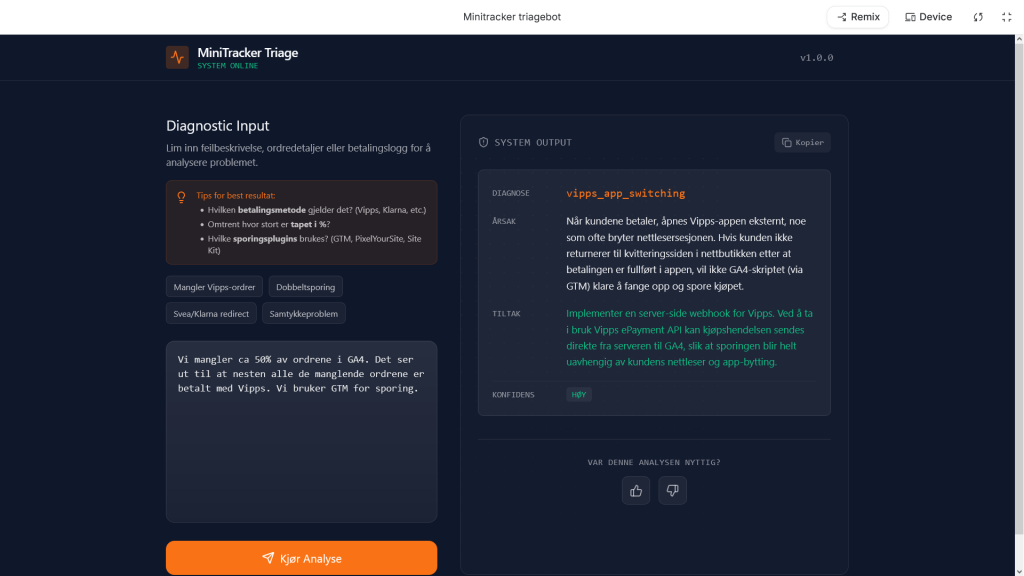
Like the minitracker triage bot for diagnosing tracking gaps in WordPress Woocommerce Ecommerce transactions:
Claude vs. Gemini vs. ChatGPT – April 2026
| Feature | Claude Opus 4.6 | Gemini 3.1 Pro | ChatGPT (GPT-5.2) |
|---|---|---|---|
| Context window | 1M tokens | 1M tokens | 128K tokens |
| Best for | Complex reasoning, coding, long-horizon agents | Google Workspace, multimodal, cost | Creative, general use, plugins |
| Safety framework | Constitutional AI | RLHF | RLHF + moderation |
| MCP support | Native | Native | Native |
| Agent Skills | Yes (Agent Skills) | Limited | Custom GPTs |
| Desktop agents | Cowork, Chrome, Excel, PPT | Google apps native | Operator (beta) |
| API input price | $5.00/MTok | $1.25/MTok | ~$5.00/MTok |
| Agentic task horizon | 14.5 hours | Not published | ~8 hours |
Choose Claude when: Your use case involves complex multi-step reasoning, large-codebase analysis, compliance-sensitive document processing, or long-horizon autonomous agents. Also when you need predictable, consistent behavior at the edges.
Choose Gemini when: Your team lives in Google Workspace and you need native Drive/Gmail integration at lower API cost.
Choose ChatGPT when: You need the broadest third-party plugin ecosystem or DALL-E image generation. —
Claude in Action: How We Actually Use It
Platform development (Emergent → Railway migration)
When we moved parts of the 3LA platform off Emergent’s Kubernetes environment, the biggest risk was environment variable drift across services. Claude Code (Sonnet 4.6) audited all four services, mapped every env var dependency, and produced a migration checklist with zero misses. We verified manually and found one addition to make. That is the kind of task where the alternative is a spreadsheet and four hours of careful human attention.
Character calibration (Pippa, Ulf, Laia)
The 3LA platform runs three AI characters with distinct roles: Ulf analyzes, Pippa creates, Laia closes. Each has a character document, a system prompt, and specific validator rules. Building and maintaining this across three codebase instances — chat.py, audits_chat.py, collab.py — required Claude to hold the full character specification in context while editing individual files without introducing drift. Sonnet 4.6 handled this reliably. Earlier models did not.

This article
The GSC data analysis, Trends interpretation, and article structure were built with Claude in this conversation – cross-referencing 22,000+ impressions of search data against Breakout trend signals to identify what the market is actually asking for. That is Claude as a research and editorial partner, not just a writing tool.
Practical Use Cases by Industry
- Legal & compliance: Contract review, clause extraction, regulatory analysis. 1M context handles entire legal frameworks in one request.
- Finance: Due diligence, financial statement analysis, compliance workflows. Constitutional AI reduces hallucination risk on factual data.
- Software development: Full codebase analysis, refactoring, documentation via Claude Code. Opus for architecture, Sonnet for execution.
- Marketing & content: Agent Skills + Cowork for teams producing structured content at scale without developer dependency.
- Customer support: 200K context = full ticket history in a single session. No chunking, no lost context mid-conversation.
- Cybersecurity: Watch Project Glasswing. Mythos Preview sets a new bar for autonomous vulnerability identification.
API Pricing: April 2026
| Model | Input (per MTok) | Output (per MTok) | Context |
|---|---|---|---|
| Opus 4.6 | $5.00 | $25.00 | 1M tokens |
| Opus 4.6 Fast Mode | $30.00 | $150.00 | 1M tokens |
| Sonnet 4.6 | $3.00 | $15.00 | 200K / 1M |
| Haiku 4.5 | $1.00 | $5.00 | 200K |
Cost levers: Batch API (50% discount), prompt caching (90% reduction on cache hits for repeated system prompts), structured outputs (no surcharge).
Consumer plans: Free (Sonnet 4.6, usage-limited), Pro ($20/month, Opus access + memory), Team, Enterprise (self-serve from 2026 — no sales conversation required).
The Visibility Gap No Model Documentation Covers
Every update above makes Claude more powerful as a tool you use. None of it determines whether Claude cites your content when it answers your customers’ questions.
That depends on how your content is structured – not which model version is running. Pages with high Google Search impressions but zero AI citations are what we call Dark Opportunities. The Three-Layer Approach™ addresses the L3 layer that Anthropic’s documentation does not cover: chunk architecture, BLUF structure, and Citation Rate tracking (CFR = AI Citations ÷ Search Impressions × 100).
The Three-Layer Approach → | Gemini Guide 2026 → | Claude Guide 2025 →
Curious how Claude could work inside your business stack?