We are entering a new era of digital intelligence. The shift from “searching for links” to “asking for answers” has evolved into something far more profound: Deep Research AI.
For organizations operating in high-stakes, capital-intensive markets—such as renewable energy, finance, or global infrastructure—this shift has created a critical vulnerability. Even with proven expertise and world-class results, you risk becoming invisible to the AI agents that now act as the primary gatekeepers for capital and partnerships.
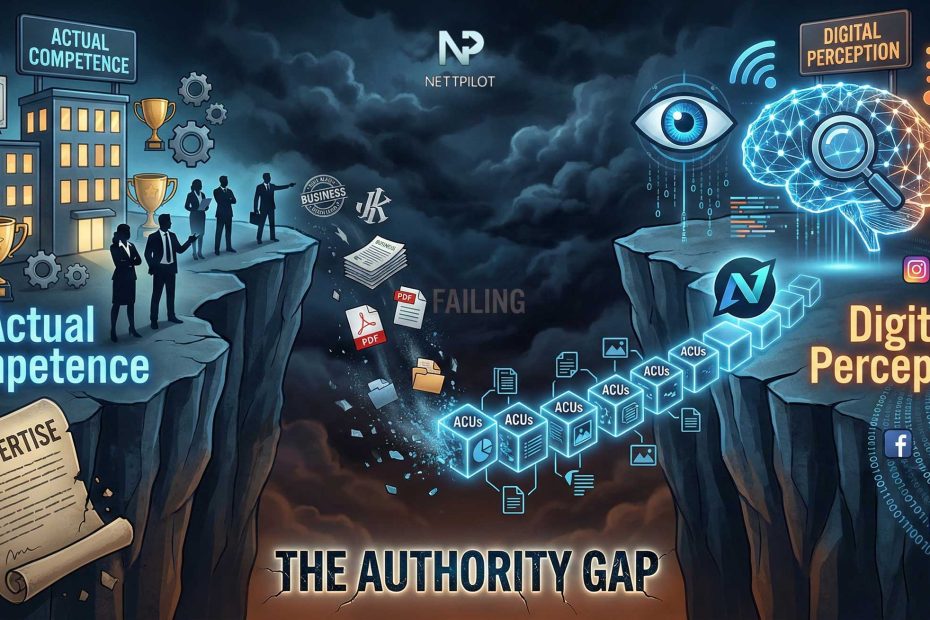
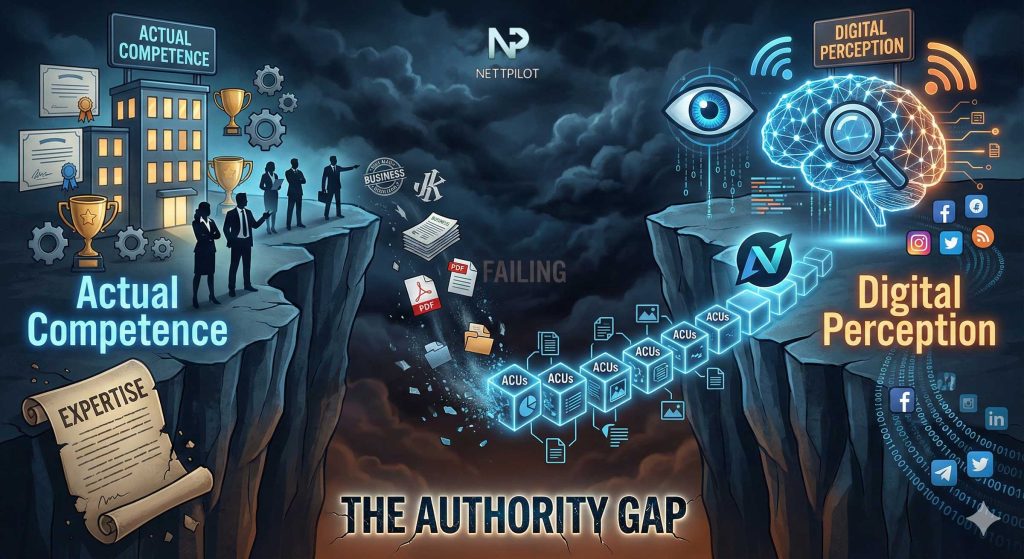
Recent industry data confirms the scale of this crisis: While 85% of consumers search online before making decisions, a staggering 78% of professional service firms struggle to effectively build digital authority. This disconnect creates a massive “Authority Gap” between actual competence and digital perception.
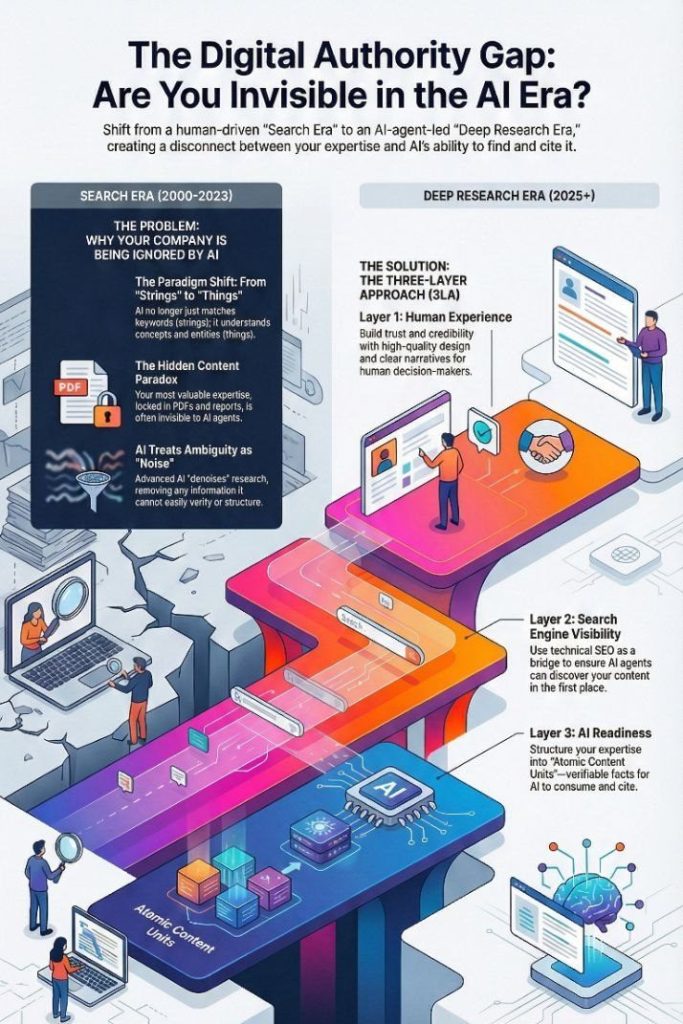
The Problem: The Hidden Content Paradox
Many enterprises suffer from “The Hidden Content Paradox”. They produce vast amounts of high-value content—annual reports, technical specifications, and ESG analyses—but this information often remains “dark matter” to modern AI models.
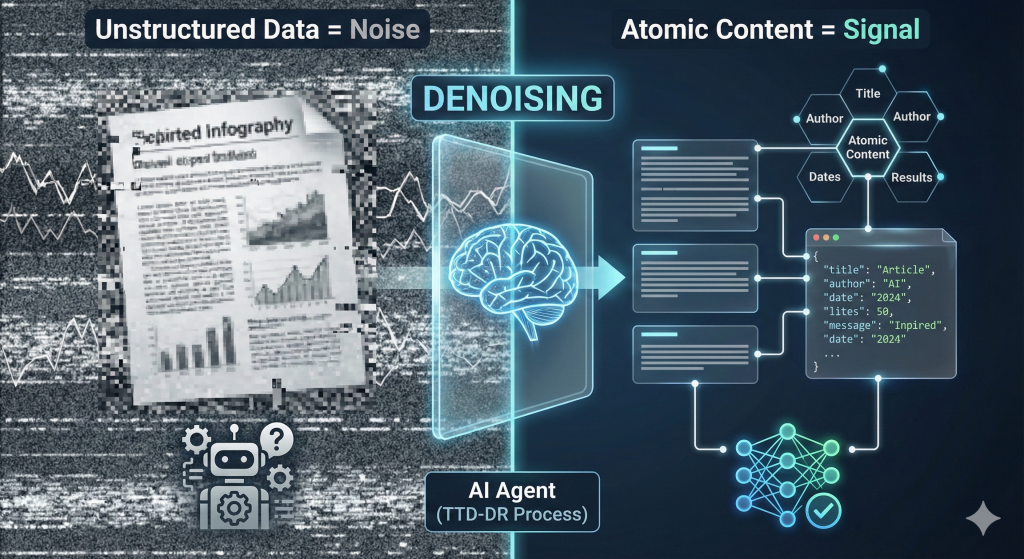
- Unstructured Data: When facts are locked in legacy PDFs or hidden within complex layout tables, AI models are forced to rely on “probabilistic guessing” rather than fact-checking.
- The Cost of Invisibility: The financial impact is measurable. Studies show that firms with strategic content visibility generate 168% more monthly leads than those without. Yet, many organizations are invisible because their data is not structured for the machines that now perform 96% of the initial research vetting.
The Technical Proof: Google’s “Deep Researcher”
The recent unveiling of Google’s Test-Time Diffusion Deep Researcher (TTD-DR) confirms that the stakes have never been higher. Unlike traditional AI that gives instant, surface-level responses, TTD-DR mimics human research: it plans, searches, critiques, and revises its findings through an iterative process.
- The Denoising Step: TTD-DR treats initial drafts as “noisy” and uses external information to “denoise” them into high-quality reports. If your data is unstructured, it is mathematically treated as noise.
- The Sourcing Battle: As the AI agent performs multiple search iterations to verify claims, it prioritizes sources that are structured for machine consumption. If a competitor provides “Atomic Content Units” (via 3LA) while your data remains buried, the AI will cite the competitor as the authoritative truth.
The Solution: The Three-Layer Approach (3LA)
To close the Authority Gap, your digital architecture must be optimized for three critical layers simultaneously. At Nettpilot, we don’t just build websites; we build Authority Architectures.
- Layer 1 (Human/UX): Engaging content that builds human trust and relational capital. We write for people first.
- Layer 2 (Search/SEO): Authority in traditional search engines. With first-page rankings delivering a 31.7% click-through rate compared to just 3.5% on page two, traditional SEO remains vital foundation.
- Layer 3 (AI/LLM Readiness): Structured, machine-readable truth that ensures AI agents not only understand your content but cite it as a verified source.
Strategic Implementation: Why We Choose Payload CMS
Closing the gap requires a fundamental shift in technology. This is why we are moving our enterprise clients to Payload CMS.
This isn’t a pivot we take lightly. For over 15 years, Nettpilot has been a staunch advocate of WordPress. My own roots in digital structure go back even further, to my time as an administrator for PROSA (the Danish Association of IT Professionals).
At PROSA, I learned that information architecture is the backbone of professional integrity. If data is lost or misunderstood, trust is broken. In the legacy web, we structured content for human readability. In the Agentic Web, we must structure it for machine verification to maintain that same integrity.
Payload allows for a “Code-First” architecture where content is strictly typed and stored in your own vector-ready database. It ensures Data Sovereignty—you own your “Contract of Truth,” independent of third-party API changes.
From RAG to Architectural Trust
We are also advising clients to move beyond complex RAG (Retrieval-Augmented Generation) pipelines where possible. By leveraging “Long Context” models like Google Gemini, we can drastically simplify the path to AI-readiness.
- Context Caching: With context windows exceeding 1 million tokens, we can feed entire project archives directly into the model, ensuring 99%+ “needle-in-a-haystack” accuracy.
- The
/llms.txtProtocol: Implementing an/llms.txtfile provides a noise-free Markdown pathway specifically designed for deep-research AI crawlers.
The Norwegian way: The AI-First Mandate
As leaders like Nicolai Tangen of the Norwegian Sovereign Wealth Fund (NBIM) move toward an “AI-first” operational model, “waiting and seeing” is no longer a viable strategy. Closing the Data Authority Gap is a boardroom imperative.
The choice is simple: allow AI models to hallucinate your reputation based on noise, or build the architecture that ensures your actual expertise is heard and cited as the definitive source.